
Burns, Campfires & Homeopathic Remedies: What to Know
This past weekend, I went on a backcountry camping trip and managed to burn myself twice. Ouch!
The first time, I grabbed a log from the fire to turn it around, thinking one end hadn’t burned yet because there was no visible flame or charcoaling.
Well… I was wrong.
The underside of the log had been on fire earlier. The flames had gone out, but the wood was still very hot.
The result? Burns on the pads of three fingers.
Then, a little later, I made another mistake.
I didn’t notice that some tiny embers had jumped from the fire into the surrounding grass. When I went to put my hand down on the grass to help myself up, I suddenly felt a sharp pain.
I yelped and jumped up, realizing I had pressed my hand directly onto an ember.
Almost immediately, I noticed two small blisters beginning to form. Eventually, they joined together and became one larger blister.
Unfortunately, I didn’t have any of my usual remedies with me.
So I went with an approach I had used in the past that brought me some relief:
Mud.
I found some nearby, covered the burned fingers as best I could, and carried on.
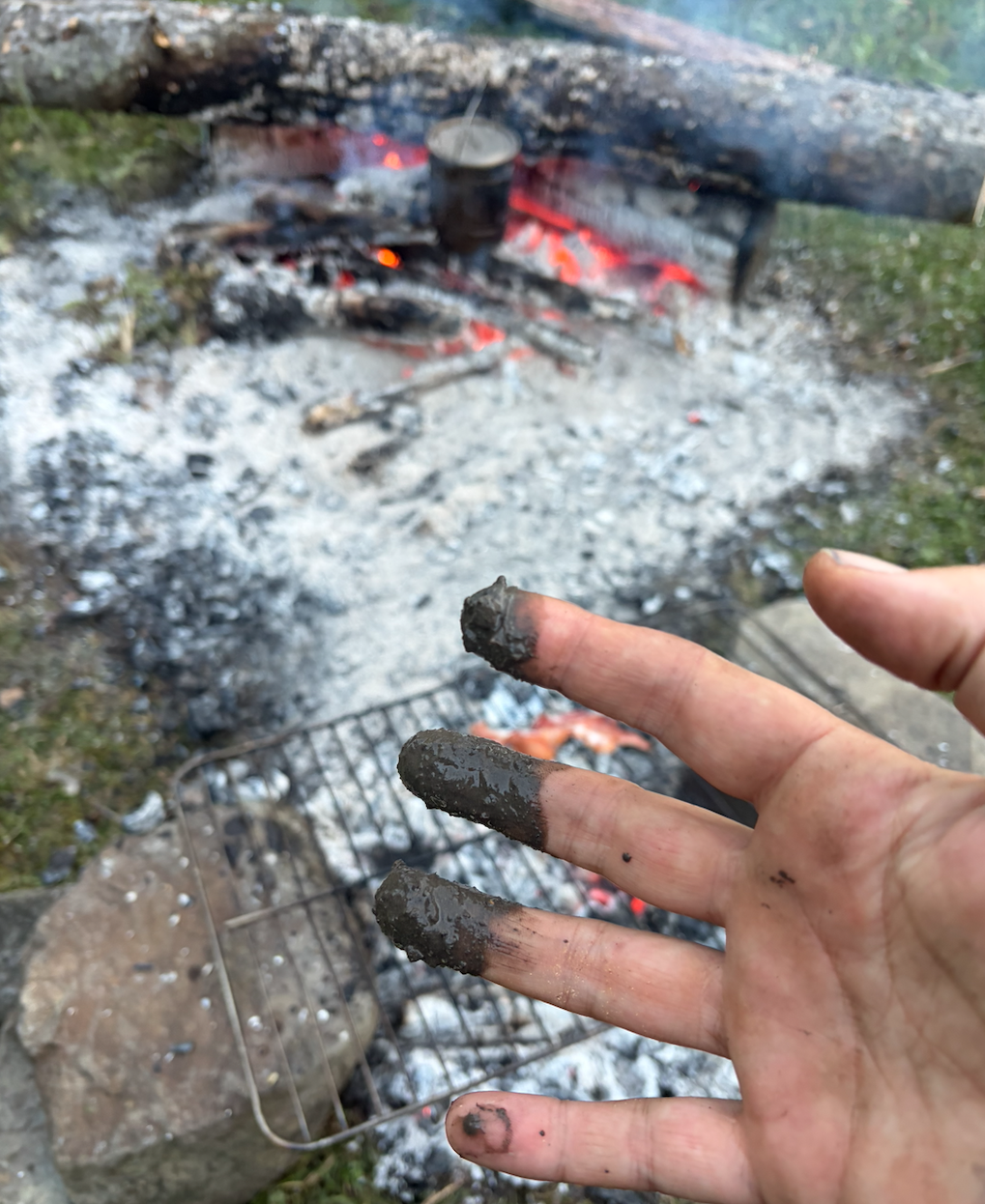
The experience got me thinking…
It might be helpful to put together a resource on some of the homeopathic remedies traditionally used for different types of burns — including heat burns, scalds, sunburns, and frostbite.
But before getting into the remedies, let's look at the different degrees of burns.
Understanding Burn Degrees
1st-degree burns affect only the outer layer of skin. The skin is typically red, painful, and dry, without blisters.
2nd-degree burns extend deeper into the skin. They are often red, very painful, swollen, and blistered.
3rd-degree burns destroy the full thickness of the skin. The affected area may appear white, brown, or charred and may be numb because the nerve endings have been damaged.
4th-degree burns extend beyond the skin into deeper tissues such as fat, muscle, tendons, or even bone. The area may appear blackened or charred and can have little or no sensation.
Homeopathic Remedies for Burns
Agaricus — A remedy to consider for frostbite. The skin may itch or burn, particularly on the face, with redness.
Apis — Minor burns accompanied by significant pain, redness, and swelling, particularly when symptoms are relieved by ice-cold applications. Also traditionally considered for certain chemical burns involving the eyes.
Arsenicum — Burning sensations that feel intensely hot but are relieved by warmth, with cold applications making symptoms worse. Restlessness and anxiety may accompany the symptoms. Traditionally considered for more serious burns as well.
Belladonna — A remedy to consider for sunburn when the skin is very red and hot to the touch, with throbbing pain.
Calendula — Traditionally used in homeopathy for burns, including some 2nd- and 3rd-degree burns, and burns involving the mouth or esophagus. This refers to the homeopathic preparation of Calendula.
Cantharis — Traditionally considered for painful burns, particularly when there is blistering and symptoms are relieved by cold applications. Also used traditionally for burns involving mucous membranes.
Carbo vegetabilis — Considered when burns are accompanied by shock, collapse, or extreme weakness.
Causticum — A classic remedy to consider when someone says they have “never been well since the burn.” It is also traditionally associated with old burns, recurring soreness, and problematic scarring.
Hypericum — Traditionally considered when burn pain is especially intense and nerve-sensitive, with stabbing, shooting, or tingling sensations, or numbness. Also associated with sunburn and complications following burns.
Kali bichromicum — Traditionally considered for burns caused by steam or vapor.
Lachesis — Traditionally associated with wounds that are slow to improve and develop a purplish appearance. Also considered for scalds and complications following burns.
Urtica urens — A remedy to consider for 1st- and 2nd-degree burns when the tissue is not destroyed. Burning and itching sensations are common, and it is traditionally associated with scalds from hot or boiling water. It may also be considered for sunburn when the pain is prickly or stinging.
What About Serious Burns?
While homeopathy can be part of the supportive care someone chooses to explore, serious burns require appropriate medical attention.
Deep burns, extensive burns, burns involving the face, hands, feet, genitals, major joints, or airways, electrical or chemical burns, and burns with signs of shock or severe tissue damage should be evaluated promptly by a qualified medical professional.
Want to Learn More?
Wondering where you can find these remedies? I have a list of pharmacies around the world that carry homeopathic remedies.
Want to understand potency and dosing? You can read more about potency [here] and dosing [here].
And if you've experienced a burn and would like help choosing a homeopathic remedy for an acute situation, you can book an acute consultation with me [here].
Hopefully, you won't need this information anytime soon!
But after my little camping adventure, I know I'll be a lot more careful about grabbing logs from the fire. 😉